

Facilitation
Focus: A shared discussion or decision for the group.
How we work: Structured facilitation of a common challenge.
Explore facilitationFor organisations
Coaching, structured conversations and peer learning for the challenges your people are facing. We work with HR, L&D and O&D teams, leaders and managers.
Working with Valleys to Coast, a housing association in Bridgend, Wales.
Start with what your people need to work through. You do not need to choose a programme before getting in touch.
Focus: A shared discussion or decision for the group.
How we work: Structured facilitation of a common challenge.
Explore facilitationFocus: Learning with peers through real challenges.
How we work: Reflective questions about participants' real challenges.
Explore Action LearningFocus: Personal, professional and leadership goals.
How we work: One-to-one coaching. Intro to Coaching can be added for groups of managers.
Explore coachingHow it works
Enough structure to hold the group together, without telling anyone what to think.
We agree a clear purpose, the right people in the room and any material worth sharing in advance.
People think on their own first, then compare, so the first voice does not set the direction. The facilitator stays neutral and keeps time.
Typical share of session time. Most of it goes on what helps and what gets in the way.
Regular reviews keep actions moving, and the analysis is updated as you learn.
After each session
Want to try the method first? Download the one-page worksheet or read the first two chapters of the book free.

A shared conversation
Space to think and decide together.

A structured conversation for a group working through a shared challenge, with someone to guide the discussion rather than take sides.
How we work: Online or in person, with teams and groups from the same organisation. We discuss your needs first and then prepare a tailored proposal where appropriate.
Bring different perspectives into the room, explore what matters and clarify possible next steps. The focus is the discussion or decision your team needs to work through.
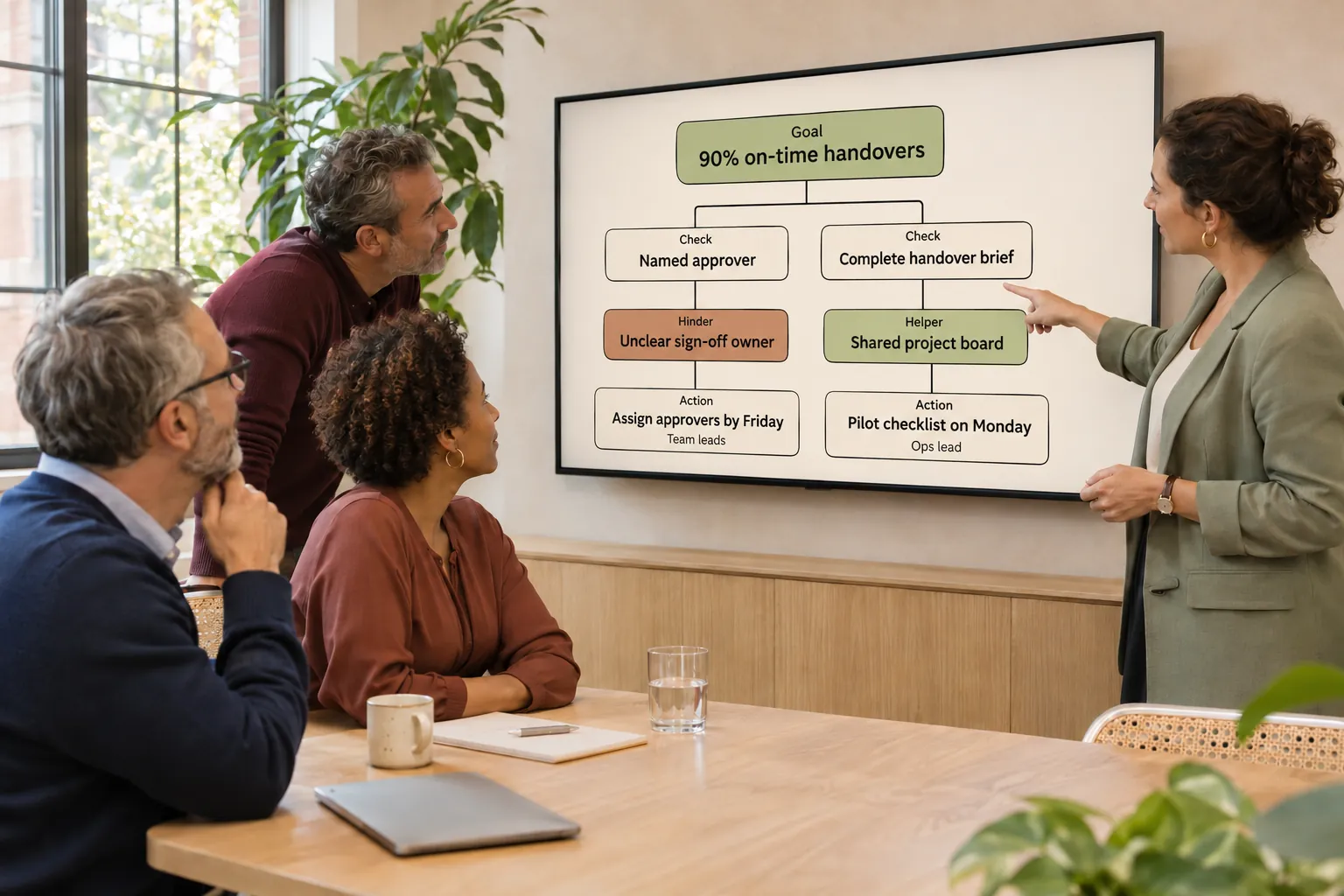
The YRoot framework gives the conversation a shared structure: the goal, what it depends on, what helps or gets in the way, and possible actions. See how the framework works.
Learning with peers
Learn through real challenges.

Facilitated peer learning that starts with the challenges participants bring, not a set of hypothetical exercises.
How we work: Online or in person, with teams and groups from the same organisation. We discuss your needs first and then prepare a tailored proposal where appropriate.
Participants use reflective questions to explore a challenge, consider what helps or gets in the way, and identify possible action. The emphasis is on learning with peers, rather than receiving a ready-made answer.
The YRoot questions help participants connect reflection to the goal and the conditions that support it. Explore the framework.
Personal goals & coaching foundations
One-to-one support, and a way into coaching.

One-to-one coaching for personal, professional and leadership goals, alongside an introduction to coaching through the YRoot framework.
Explore personal and career goals, leadership priorities, decisions and possible next steps through one-to-one coaching.
Personal & executive coachingAn introductory course on coaching mindset, listening and structured questioning through YRoot, available as an add-on for groups of managers and team leads.
Intro to CoachingAdd-on for your organisation
Add Intro to Coaching alongside facilitation or Action Learning, so managers and team leads can use coaching conversations and the YRoot questions in their everyday work.
Coaching, strategy sessions and facilitation for researchers, research groups and departments, from a new research idea to research leadership.
Explore support for researchersTell us about your organisation, the challenge and who is involved. You can describe the situation without naming a programme.
Yes. The focus and approach can be discussed in relation to your goals, people and organisational context.
No. Sending an enquiry starts a conversation; it does not confirm an appointment.